Horticulture
We look to enhance soil health and fertility as a key strategy to developing more intensive cropping for the farmer.
It is equally important to address the specific needs of a crop, as it is to address the challenges posed during each season.
For those reasons, BioAg programs are tailored to suit each individual farm and paddock by analysing the results of soil and /or tissue tests alongside the location, history and characteristics of the block, as well as your budget and goals for yield and quality.
Recommended products
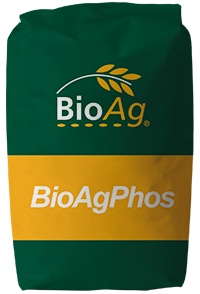
BioAgPhos
Solid Fertiliser
Phosphorus 13%
Sulphur 1% / Calcium 35%
Highly reactive phosphate fertiliser made from high-grade reactive phosphate rock combined with BioAg’s microbial digesting agent.
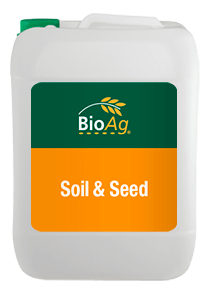
Soil & Seed
Liquid Biostimulant
Formulated to improve soil microbial activity, natural soil fertility and moisture and nutrient utilisation.
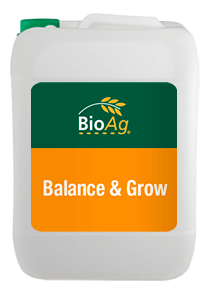
Balance & Grow
Biostimulant
Formulated to increase vegetative growth, root development and soil microbial activity. Ideal for broadacre, pastures and horticulture.
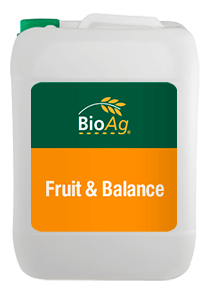
Fruit & Balance
Biostimulant
Formulated to increase flowering, fruit set and soil microbial activity. Fruit & Balance enhances the nutritional value and quality of fruit or grain by increasing plant sugar levels.
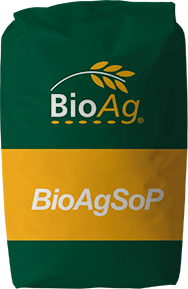
BioAgSoP
Solid Fertiliser
Organically certified granular form of fertiliser containing potassium and sulphur. Immediately available to crops and plants. Ideal for crops with a high potassium demand and sensitive to chloride.
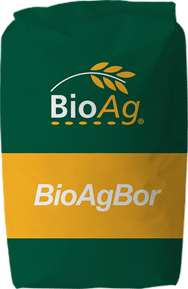
BioAgBor
Trace Element
A sustained-release form of boron suited to a range of enterprises such as horticulture, vegetables, pastures and field crops.

Committed to organics
With a core range of natural fertilisers and biostimulants, BioAg can offer an extensive range of products certified by Australian Organics, suitable for use in organic systems.
The BioAg approach
BioAg nutrition programs are incorporated into a growers current nutrition program. Our objective is to make fertiliser and other inputs work better and build and support healthy and balanced soils and plants. Programs are custom-made for each block, using advanced soil and tissue analysis. These integrated programs typically incorporate a range of BioAg solid and liquid nutrients, often associated with conventional inputs. BioAg fertility programs can be developed to meet organic certification requirements.
Soil test
An experienced and Fertcare accredited BioAg agronomist works with you and provides technical expertise on your crop. If you don’t already have recent soil test data, we arrange a soil test for you. The results provide essential information about the soil fertility and soil structure for better performance. Download the BioAg soil sampling procedure here.
A tailored program
Based on the results of soil tests, crop requirements and other factors such as soil structure, climate, history of the block, and targets that you are trying to achieve, we provide a tailored program that aims to improve soil fertility and maximise yield response. We support you through the program to ensure that inputs are applied at the right time, in the right way.
Leaf and tissue testing
Any nutritional program cannot foresee the changes in weather, disease, or pests, that may impact a crop. During the season, growers may observe issues or evidence of stress in their crop. This may be due to greater growth or yields than planned, a trace element shortage or abiotic stresses. An on-farm inspection and associated leaf or tissue tests will promptly identify any issues, which can quickly be addressed by applying the appropriate inputs. Download the BioAg leaf sampling procedure here.
High yielding crops require fertile balanced soils
Key to highly productive crops is the function of soils. Soil structure, chemistry and biology are critical in supporting crops throughout the growing season. By improving all aspects of the soil, crops will benefit from improved access to moisture, due to improved infiltration and water holding capacity, improved access to nutrition through improved nutrient cycling, fixation (for N) and a reduction in loss pathways, improved resilience to abiotic stresses and disease, improved root growth providing access to additional moisture and nutrients as well as improved carbon sequestration and a range of other benefits (click for more on soil health).
Beneficial microorganisms stimulate the plant’s root growth and help protect it from abiotic stresses. This is made possible through mutually beneficial relationships that microbes develop with plants, for example mycorrhizal associations. BioAg products programs supply essential macronutrients (N, P, K, S, Ca), trace elements (B, Zn, Cu etc.), microbial food and metabolites beneficial microorganisms that colonise root systems, improving soil function, plant health and productivity.

Horticulture resources
- Navigating Phosphate Prices
As we approach the end of 2025, phosphate prices remain stubbornly high — and many in agriculture are asking why. The answer lies in a mix of global demand shifts, supply chain changes, and local challenges that have reshaped the fertiliser market.
- Zucchini mid-season update
It has been another fruitful season of zucchini cultivation in Shepparton, Victoria, in collaboration with GV Roo’s Director, Dhami Singh, and his dedicated team.
- A critical time to address nutrient deficiencies
As fruit and nuts near maturity and harvest, the critical processes for perennial tree crops and vines are the accumulation of sugars, the maintenance of the sugar-to-acid ratio, and the development of colour, and for vines, an increase in anthocyanins (dark pigments).
- Soil-nutrient relationships
Nutrients, such as calcium and magnesium, may be supplied to plants solely from reserves held in the soil. Others like phosphorus and nitrogen are added regularly to soils as fertiliser to be withdrawn as needed by crops.